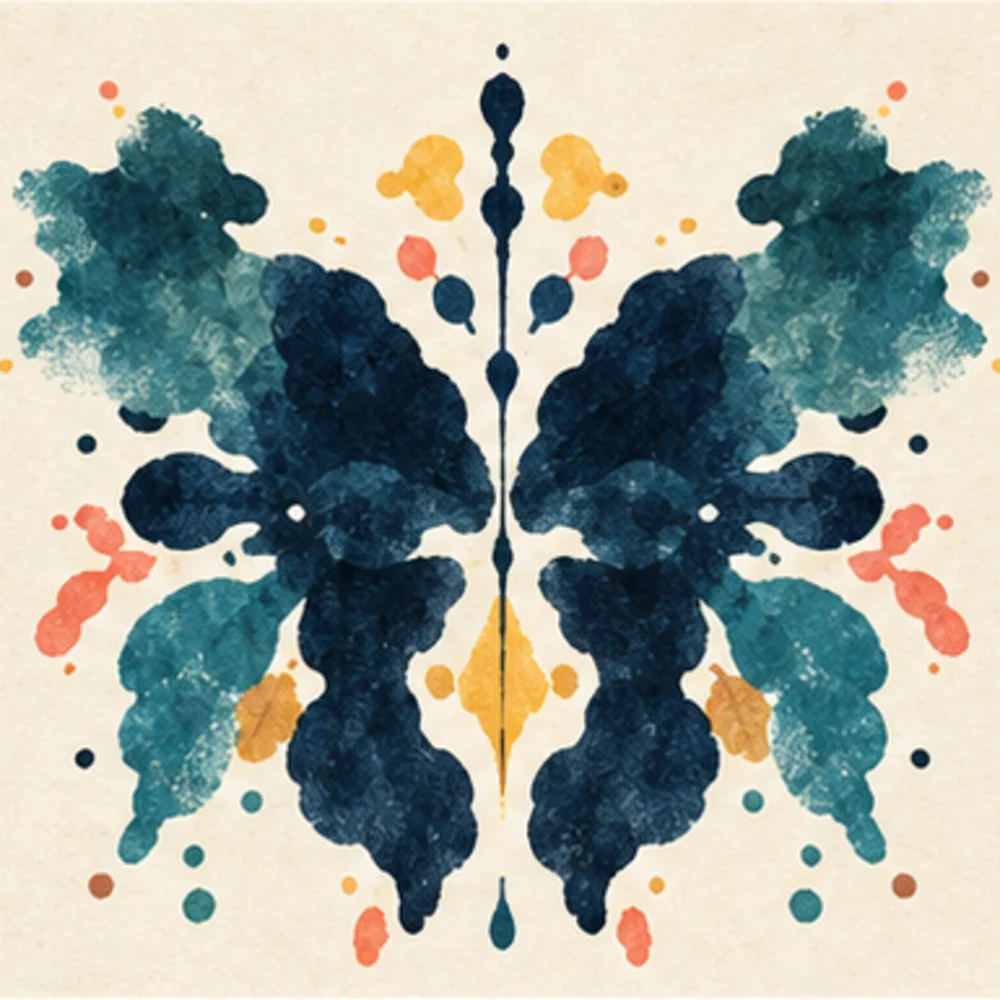
An unfamiliar shape may first look like an animal, a landscape, or two figures facing one another. This Rorschach-inspired quiz lets you explore those first impressions through a series of image-based choices. Look at each picture before reading too much into the available descriptions.
The quiz and basic information are free. This version contains 20 questions. Set aside time to read the items, think about your own experience, and choose the closest available response.
An image can invite more than one interpretation
The quiz presents 20 image-based items with suggested descriptions. Choose the available response closest to what you notice. You may see something that is not named exactly in the options; in that case, choose the nearest description rather than trying to identify a hidden correct answer.
The historical Rorschach method involves more than choosing from an online list. This page is an independent, image-inspired activity with Mind Indicator's own interpretation. It is not a reproduction of a professionally administered Rorschach assessment.
What this can look like in everyday life
A symmetrical shape might suggest a butterfly to one person and a pair of figures to another. Attention may go first to the outline, the centre, or a small detail. The options help you describe that impression; they do not establish which person's perception is better.
After reading an option such as “clouds,” you may begin to see clouds in the image. To notice your own first impression, look at the picture briefly before reading the choices. Then use the available answer that comes closest.
How to approach the questions
- View the whole image on a comfortably sized screen.
- Notice your first impression before studying the response descriptions.
- Choose the closest option if your exact impression is not listed.
- Do not search for a secret correct answer or assume that one image reveals your whole personality.
Try a small exercise in perspective
Look at an abstract picture and describe three different possibilities it suggests. Notice what changed when you focused on its outline, a detail, or the space around it. This can be a creative discussion about perspective without assigning psychological meaning to every shape.
The publisher's history of the Rorschach technique explains the original method's background. The activity on this page uses its own image choices and does not inherit the original method's assessment claims.
Common questions
What if I see something not listed?
Choose the closest available description. The options are a practical limitation of this online activity, not a list of everything an image can suggest.
Is there a best response?
The activity asks about your impression. Do not treat an option as a sign of greater creativity or a better personality.
What is available after finishing?
The quiz and basic information are free. If you would like to explore the written interpretation further, an expanded report is available as an optional paid addition.