ADHD in Children: Symptoms, Causes, Diagnosis, Treatment, and Support
Table of contents:
- What is ADHD in children?
- Types of ADHD (inattentive, hyperactive‑impulsive, combined)
- How common is ADHD?
- Causes and risk factors
- Signs and symptoms by age
- Screening and diagnosis
- Common co‑occurring conditions
- Evidence‑based treatments
- Parenting strategies that work
- School and classroom supports
- Lifestyle, sleep, and nutrition
- Myths vs facts
- Long‑term outlook
- When to seek professional help
- FAQs
What is ADHD in children? Attention‑Deficit/Hyperactivity Disorder (ADHD) is a neurodevelopmental condition that affects a child’s ability to focus, regulate impulses, and manage activity levels. It appears in early childhood and can affect learning, behavior, emotions, and relationships at home and school. ADHD is not the result of poor parenting or lack of willpower; it reflects differences in brain development and function related to attention, executive functions, and self‑regulation.
Types of ADHD Clinicians typically describe three presentations:
- Predominantly inattentive: Difficulty sustaining attention, following instructions, organizing tasks, and finishing work; forgetfulness and distractibility.
- Predominantly hyperactive‑impulsive: High activity level, fidgeting, restlessness, acting without thinking, interrupting, and trouble waiting.
- Combined: Features of both inattentive and hyperactive‑impulsive symptoms.
How common is ADHD? Prevalence estimates vary by country and method, but research commonly suggests that roughly 5–7% of school‑age children meet criteria for ADHD. Many children continue to experience symptoms into adolescence and adulthood, though their presentation can change over time.
Causes and risk factors ADHD arises from a mix of genetic, neurobiological, and environmental factors.
- Genetics: ADHD tends to run in families; multiple genes contribute small effects.
- Brain development: Differences in networks governing attention, reward, and executive function.
- Prenatal and early life factors: Prematurity, low birth weight, prenatal exposure to nicotine or alcohol, and early life adversity can increase risk.
- Environment: Lead exposure, chronic sleep problems, or inconsistent routines may exacerbate symptoms, though they do not “cause” ADHD on their own.
Signs and symptoms by age Preschool (3–5 years):
- Constant motion, difficulty sitting for activities, frequent climbing or running
- Impulsivity: grabbing, hitting, or difficulty waiting turns
- Short attention span for non‑preferred tasks; frequent shifting from one activity to another
Early school years (6–9 years):
- Trouble following multi‑step instructions, careless mistakes, incomplete homework
- Fidgeting, leaving seat, calling out answers
- Emotional swings, frustration with transitions, frequent reminders needed
Later school years (10–12 years):
- Disorganization (lost notebooks, messy backpack), procrastination
- Difficulty planning long‑term assignments, time‑management troubles
- Social challenges: interrupting, blurting, or misreading social cues
Adolescence (13+):
- Persistent disorganization, forgetfulness, and missed deadlines
- Risk‑taking or impulsive decisions (e.g., speeding, substance experimentation)
- Internal restlessness replacing overt hyperactivity
Note: Many behaviors above can occur in all children at times. ADHD is considered when symptoms are frequent, long‑standing, begin in childhood, and cause impairment in at least two settings (e.g., home and school).
Screening and diagnosis A comprehensive evaluation should be performed by a qualified professional (e.g., pediatrician, child psychologist/psychiatrist).
- History and interviews: Gather information from parents/caregivers and teachers across settings.
- Standardized rating scales: Validated questionnaires compare behaviors with age‑based norms.
- Rule‑outs: Vision/hearing problems, sleep disorders, learning differences, anxiety, depression, autism spectrum, and other medical issues can mimic or magnify ADHD symptoms.
- Functional impact: Clinicians assess academic, social, and daily‑life functioning, not just symptom counts.
Common co‑occurring conditions
- Learning disorders (reading, writing, math)
- Language disorders
- Anxiety and depressive disorders
- Oppositional defiant disorder (ODD)
- Autism spectrum traits
- Tic disorders and sleep problems Recognizing and treating co‑occurring issues improves outcomes.
Evidence‑based treatments Optimal care typically combines psychoeducation, behavioral strategies, school supports, and—when appropriate—medication.
Psychoeducation and behavioral therapy
- Parent training in behavior management (PTBM): Teaches positive reinforcement, consistent routines, and effective consequences.
- Cognitive‑behavioral strategies for older children/teens: Goal setting, problem‑solving, organization, and coping skills.
- Social skills training: Useful when peer challenges are present.
Medication (when clinically indicated)
- Stimulants: Methylphenidate and amphetamine formulations are first‑line in many guidelines; they improve attention and reduce hyperactive‑impulsive symptoms for most children.
- Non‑stimulants: Atomoxetine, guanfacine, or clonidine can be effective alternatives or add‑ons.
- Monitoring and side effects: Possible appetite loss, sleep difficulties, stomachache, headache, or irritability; clinicians adjust dose/formulation and monitor growth, sleep, and mood.
School supports and accommodations
- Individualized supports: Preferential seating, reduced distractions, and visual schedules
- Task design: Shorter instructions, breaking work into chunks, extended time or separate testing area
- Organizational aids: Color‑coded folders, checklists, assignment planners, and daily home–school communication
- Positive behavior supports: Clear rules, predictable routines, praise, and token systems
- Legal frameworks: Depending on country, students may qualify for formal supports (e.g., IEP/504 in the U.S.) based on documented needs
Parenting strategies that work
- Structure and routines: Consistent morning/evening routines and clear expectations
- One‑step instructions: Give short, specific directions; check for understanding
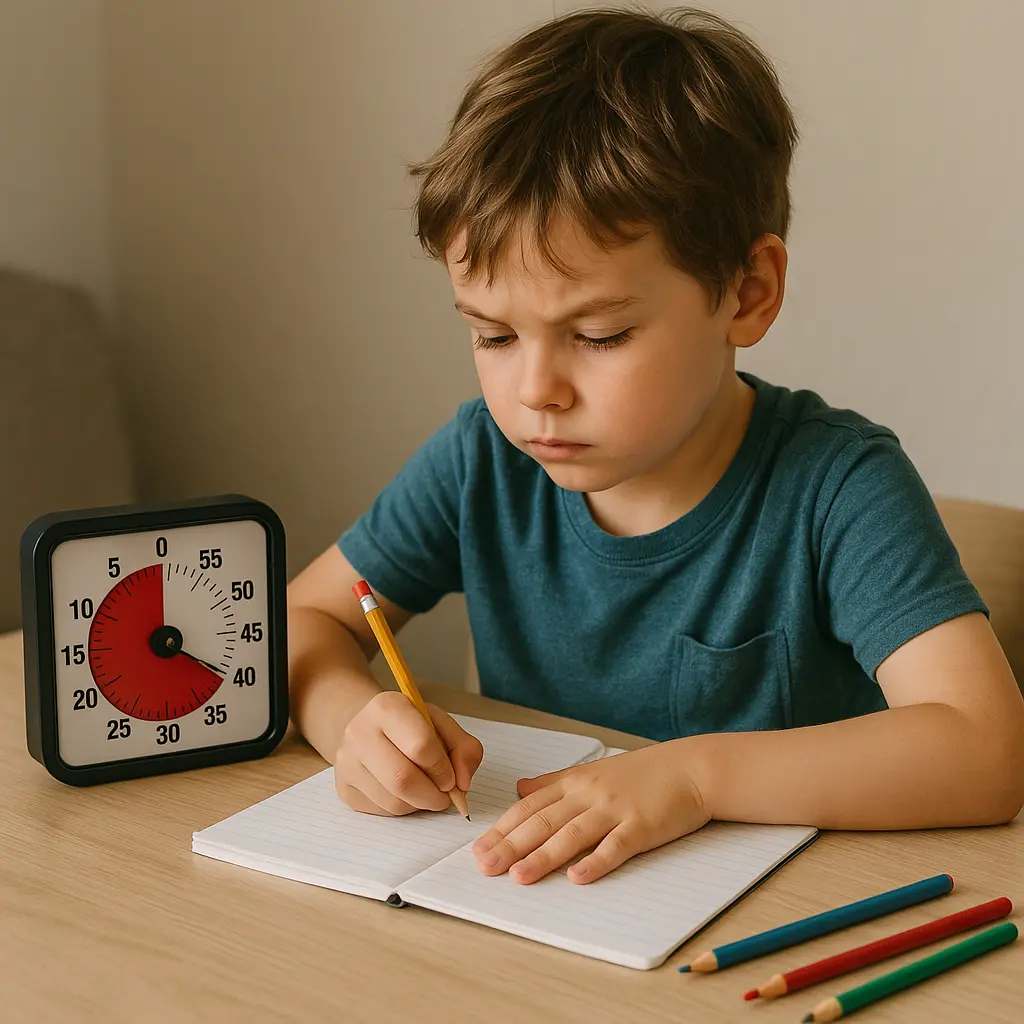
- Visual supports: Timers, picture schedules, whiteboards for tasks and deadlines
- Positive reinforcement: Specific praise for effort and progress; small, immediate rewards for target behaviors
- Manage transitions: 5‑minute warnings, countdowns, and previewing the next activity
- Collaborative problem‑solving: Involve your child in planning strategies; teach self‑advocacy
Lifestyle, sleep, and nutrition
- Sleep: Aim for age‑appropriate sleep; keep a regular schedule; limit screens at least 60 minutes before bedtime.
- Physical activity: Daily exercise improves attention, mood, and sleep quality.
- Screen time: Set reasonable limits; use parental controls; prioritize homework and sleep.
- Diet: A balanced diet supports overall health. Evidence for sugar causing ADHD is weak. Some children benefit modestly from omega‑3 supplementation; discuss with a clinician before starting any supplement. Elimination diets should be guided by professionals if attempted.
Myths vs facts
- Myth: “ADHD is caused by bad parenting.” Fact: ADHD is neurodevelopmental; parenting strategies influence coping and behavior but do not cause the condition.
- Myth: “Children outgrow ADHD.” Fact: Many improve with maturity and support, but a significant portion continue to have symptoms into adulthood.
- Myth: “Medication turns kids into zombies.” Fact: Properly dosed medication aims to reduce symptoms while preserving personality and spontaneity; side effects can often be managed.
Long‑term outlook With early identification, consistent support, and appropriate treatment, children with ADHD can thrive academically and socially. Building executive‑function skills, nurturing strengths and interests, and fostering supportive relationships are key to positive outcomes in the teen years and beyond.
When to seek professional help
- Persistent school difficulties, behavior concerns, or frequent teacher reports about attention/impulsivity
- Significant distress at home, frequent conflicts, or safety risks due to impulsivity
- Suspected learning problems, anxiety, depression, or sleep issues Start with your pediatrician or family doctor, who can coordinate evaluations and referrals.
FAQs Q: How is ADHD different from normal childhood energy? A: All children are active and distractible at times. ADHD involves more frequent, severe, and persistent symptoms that cause impairment in at least two settings (home and school) and begin in childhood.
Q: Can lifestyle changes replace medication? A: Behavior therapy, school supports, sleep, and exercise can significantly help. For many children, medication provides additional, substantial benefits. Work with a clinician to tailor the plan.
Q: Do girls get ADHD? A: Yes. Girls often present more with inattentive symptoms (e.g., daydreaming, disorganization), which can be overlooked. Awareness is improving, leading to better identification.
Q: Is ADHD overdiagnosed? A: Rates vary by region and access to care. Thorough, guideline‑based assessments reduce both under‑ and over‑diagnosis by considering alternative explanations and functional impact.
Q: What’s the best diet for a child with ADHD? A: A balanced diet is foundational. Some families report modest benefit from omega‑3s or limiting certain additives, but results vary. Consult your clinician before making major changes.
On‑page SEO checklist
- URL slug: adhd-in-children
- H1: ADHD in Children: Symptoms, Causes, Diagnosis, Treatment, and Support
- Include the primary keyword in the first paragraph and in at least one subheading.
- Use related terms naturally throughout (e.g., inattentive ADHD, hyperactive‑impulsive, classroom accommodations, behavior therapy).
- Add internal links to relevant pages (e.g., “What is ADHD?”, “Parenting strategies”, “School accommodations”).
- Image alt text suggestions: “Child focusing on homework with visual timer (ADHD in children)”, “Classroom seating plan supporting ADHD student”, “Parent using a visual schedule for ADHD morning routine”.
- Structured data (optional): Add FAQPage schema for the Q&As above to qualify for rich results.
Disclaimer This article is for educational purposes only and does not replace professional medical advice. If you have concerns about ADHD, consult a qualified healthcare professional.
Primary keyword: ADHD in children Secondary keywords: ADHD symptoms in children, ADHD diagnosis, ADHD treatment, ADHD parenting tips, ADHD classroom strategies, inattentive ADHD, hyperactive impulsive ADHD, combined type ADHD, childhood ADHD comorbidities