
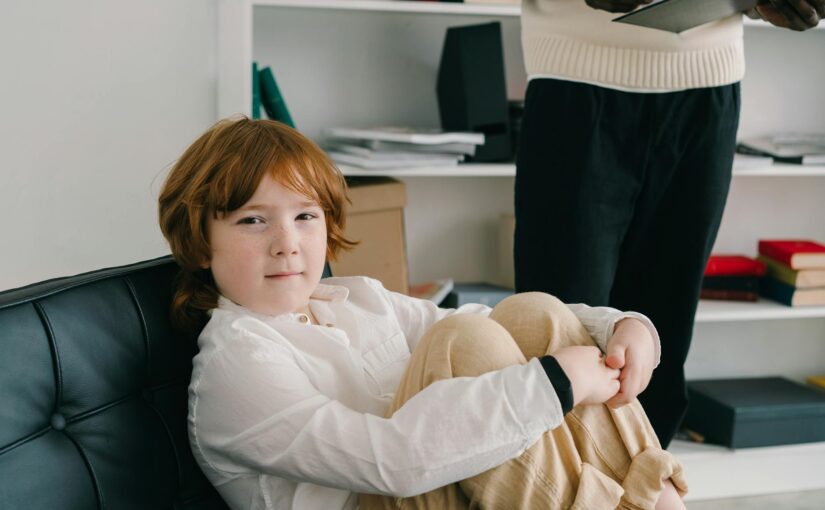
Not every child who struggles with eye contact, changes in routine, or noisy environments is autistic, and not every autistic child shows the same signs. Still, when certain patterns appear consistently over time, they may point to mild autism symptoms in children that are easy to miss at first. These signs can be subtle, especially in children who speak well, do well academically, or learn to hide their differences in familiar settings.
Understanding these early clues does not mean labeling a child too quickly. It means noticing how a child communicates, plays, adapts, and experiences the world. When families and teachers recognize mild autism symptoms early, they can better support a child’s strengths, reduce stress, and make daily life easier.
What mild autism can look like
Mild autism is often used informally to describe children whose support needs are lower or whose traits are less obvious. In clinical settings, autism is understood as a spectrum, which means symptoms can vary widely in intensity and presentation. A child with mild traits may seem outgoing in some moments and withdrawn in others, talk a lot about favorite topics, or appear socially interested but still struggle to read cues.
Because the signs are not always dramatic, adults may mistake them for shyness, sensitivity, immaturity, or personality quirks. A child might be bright and verbal yet still have trouble with conversation flow, flexible thinking, or sensory overwhelm. The key is not whether a behavior is unusual once, but whether it appears repeatedly and affects everyday functioning.
Common social communication signs
One of the most recognizable areas of mild autism symptoms in children is social communication. Some children want friends and enjoy being around others, but they may not know how to join a group, keep a conversation going, or respond in a natural back-and-forth way. They may answer questions literally, miss jokes, or seem confused by indirect language.
A child might speak clearly and use advanced vocabulary, yet still sound formal or rehearsed. Some children dominate conversations about a favorite subject without noticing when the listener has lost interest. Others may talk very little in unfamiliar settings, even if they speak comfortably at home. These differences can be subtle, but they often become more noticeable as social expectations grow with age.
Eye contact and body language
Eye contact is often discussed, but it is only one small part of communication. A child with mild autistic traits may avoid eye contact, use it inconsistently, or find it uncomfortable during emotional conversations. They may also have limited facial expression, unusual gestures, or a mismatch between what they feel and how they appear.
Sometimes the issue is not a lack of interest in people, but difficulty processing multiple social signals at once. Looking at a speaker’s face, listening to words, and interpreting tone can feel overwhelming. As a result, a child may focus better when they are not expected to maintain constant eye contact.
Friendship difficulties
Children with mild autism often want connection, but friendships can still be confusing. They may prefer one-on-one interaction, struggle to enter group play, or rely on older children or adults for social structure. They might take turns too literally, miss shifting rules in games, or feel upset when peers change plans without warning.
At times, a child may seem socially awkward rather than socially avoidant. They may try hard to fit in, copy the behavior of classmates, or memorize social scripts. This effort can hide their challenges, but it may also leave them exhausted after school.
Behavior patterns that can be easy to overlook
Repetitive behaviors in mild autism are not always obvious hand-flapping or rocking. They may include repeating phrases, lining up objects, organizing toys in a specific way, asking the same question many times, or sticking closely to routines. These habits can provide comfort and predictability when the world feels uncertain.
A child might become unusually distressed when plans change, when a teacher moves their desk, or when a favorite object is missing. They may not know how to explain the feeling, so the reaction can look like stubbornness or an emotional outburst. In reality, the child may be trying to restore a sense of control.
Intense interests
Many children have hobbies, but children with mild autism may show unusually deep and narrow interests. They might learn everything about trains, weather systems, maps, animals, video game mechanics, or a particular historical period. The interest itself is not a problem; it can become a strength. The challenge appears when the topic becomes hard to shift away from or starts to crowd out other activities.
Parents may notice that their child talks about the same subject with remarkable detail but seems less engaged with broader play or small talk. That pattern can be an important clue, especially when it is paired with social and sensory differences.
Need for routine and predictability
Many children benefit from routine, but children with mild autism may depend on it more strongly. A familiar sequence of events can make the day feel safe. When that sequence changes, even in a minor way, the child may become anxious or upset.
These reactions are often most visible during transitions: leaving the house, switching subjects, ending screen time, or moving from play to homework. Giving advance warnings, using visual schedules, and explaining changes clearly can make these moments much easier.
Sensory differences that may signal autism
Sensory sensitivities are common in autistic children and can appear in quiet, everyday ways. A child may cover their ears during hand dryers, avoid certain clothing textures, dislike tags, or complain that foods feel too crunchy, too soft, or mixed together in an uncomfortable way. They might also seek sensory input by spinning, jumping, touching objects repeatedly, or watching things move from very close up.
These responses are not simply preferences. When sensory input feels too intense or too weak, it can affect attention, mood, behavior, and participation in daily activities. A child who appears distracted, picky, or overwhelmed may actually be reacting to a sensory environment that feels hard to manage.
Emotional regulation and stress responses
Some children with mild autism seem calm most of the time but become overwhelmed when too many demands pile up. Their distress may come out as tears, irritability, shutdown, or sudden resistance. Because the child may hold it together at school or in public, the release can happen later at home, where they feel safe enough to stop masking their difficulties.
Parents and teachers may notice that these children have a hard time naming emotions or explaining what they need in the moment. Simple supports, such as quiet breaks, clear instructions, and predictable routines, can reduce stress and help prevent meltdowns or shutdowns.
How mild autism can differ by age
Signs of mild autism may look different depending on a child’s age and environment. In younger children, adults may notice unusual play patterns, limited response to name, very specific interests, or strong reactions to change. In school-age children, differences may become clearer in group work, friendships, transitions, and managing more complex social expectations.
As children grow older, some learn to compensate by watching others closely, memorizing rules, or copying social behavior. This can make the traits less visible, but it does not remove the underlying challenges. In some cases, the effort to fit in can become tiring and affect confidence or mental health.
When to consider an evaluation
If several of these signs are present across settings and have been noticeable over time, it may be worth discussing them with a pediatrician, school psychologist, or developmental specialist. An evaluation does not force a diagnosis, but it can provide clarity and help identify the right support.
Parents may want to seek guidance if a child regularly struggles with friendships, communication, flexibility, sensory input, or daily transitions. Trusting patterns over time is more useful than focusing on one difficult day or one isolated behavior.
Supporting a child with mild autism traits
Support does not need to be complicated to be effective. Many children benefit from clear expectations, visual reminders, preparation for changes, and space to recover from overstimulation. It can also help to use direct language, avoid relying too heavily on hints, and give extra time for responses.
Strengths matter too. Children with mild autism often have strong memory, deep focus, honesty, creativity, or special expertise in subjects they love. Recognizing and building on those strengths can improve confidence while support strategies address the harder parts of daily life.
FAQ
What are the first mild autism symptoms in children?
Early signs often include differences in social communication, strong routines, sensory sensitivities, and intense interests. A child may seem socially interested but still struggle with back-and-forth conversation, flexible play, or changes in routine.
Can a child have mild autism and still do well in school?
Yes. Many autistic children do well academically, especially when they enjoy structure or have strong memory and focus. School success does not rule out autism if social, sensory, or emotional challenges are still affecting daily life.
Is shyness the same as mild autism?
No. Shy children may take time to warm up socially, but they usually understand social cues and adapt more easily once comfortable. Mild autism involves a broader pattern of communication, sensory, and behavioral differences that show up across time and settings.
Do mild autism symptoms get worse with age?
The symptoms do not necessarily get worse, but they can become more noticeable as social and academic demands increase. Some children also become better at masking their traits, which can hide the challenges even when stress is increasing.
What should I do if I suspect my child may be autistic?
Start by documenting the behaviors you notice, including when they happen and how often. Then speak with a pediatrician or developmental professional about your concerns. Early evaluation can lead to helpful strategies, even before a diagnosis is confirmed.
Recognizing mild autism symptoms in children is not about fitting a child into a label. It is about understanding how they experience the world so they can be supported with patience, respect, and practical tools that fit their needs.
Bibliography
- American Psychiatric Association. Diagnostic and Statistical Manual of Mental Disorders (5th ed., text rev.; DSM-5-TR). American Psychiatric Publishing, 2022.
- Centers for Disease Control and Prevention (CDC). Autism Spectrum Disorder (ASD). https://www.cdc.gov/autism/
- National Institute of Mental Health (NIMH). Autism Spectrum Disorder. https://www.nimh.nih.gov/health/topics/autism-spectrum-disorders-asd
- NHS. Autism. https://www.nhs.uk/conditions/autism/
- National Autistic Society. Signs of autism. https://www.autism.org.uk/advice-and-guidance/what-is-autism/signs